“Ministry of Industry and Information Technology” search results (30)

Zhou Zixue of the Ministry of Industry and Information Technology investigated coffee machines, breakfast machines and other product projects.
Zhou Zixue, chief economist of the Ministry of Industry and Information Technology, and his party came to Guangdong Industrial Design City to investigate and understand many industrial design products, such as capsule coffee machines, breakfast machines, soy milk machines, and so on.
2014-05-29 Capsule coffee machine Ministry of Industry and Information Technology Zhou Zixue breakfast machine
Information related to coffee trade how to buy coffee beans through the channels of coffee trade
Official information related to coffee trade: Ministry of Trade and Industry (Ministry of Trade Industry) P.O.BOX 704 FAX: 00251-1-515411 TEL:00251-1-518025 E-mail: moti@telecom.net.et Coffee and Tea Bureau (Coffee Tea Authority) P.O.BOX 3222 FAX: 00251-1-517293 TEL:00251-1-5
2016-04-27 Coffee trade related information channels how to buy coffee beans coffee
Classification and Taste characteristics of Ecuadorian Coffee beans introduction to Flavor description treatment of varieties in producing areas
The unique roasting technology Bravo coffee R & D team has been invited by the Ministry of Labor and Social Security to compile the "Barista Professional Standard textbook". The R & D team keeps abreast of the latest information and technology of the international coffee industry and constantly exchanges and interacts with our domestic counterparts, ensuring our R & D and technological advantages. Bravo Coffee production Department introduces the most advanced Italian Pet in the world.
2016-10-18 Ecuador coffee beans classification taste characteristics variety producing area flavor description
Chinese Academy of Sciences of Coffee Information promotes the Development of Coffee Industry in Yunnan
On January 26, the three-day Pu'er Coffee Culture Festival ended perfectly with a trip to Pu'er Coffee. During this Chinese coffee event, the high-quality coffee demonstration park in Manxieba, Nanping Town, Simao District, Yunnan Province, attracted people from all over the world to participate in the event. As the first stop of the Pu'er coffee tour, Manheba boutique coffee farm ushered in the world coffee leader, SCAA (American boutique)
2015-02-05 Coffee Information Chinese Academy of Sciences achievements Yunnan Industrial Development January 26th period
Signed a contract to grow coffee beans but no one bought them (group of pictures)
The old man Ren Mutong recorded the detailed information of each client. Qiao Wenhui's warehouse stacked more than 300 mu of herbal coffee beans that had been purchased by hundreds of villagers, most of which were still stored in growers' homes. The company said that not all the purchases were due to the broken capital chain, promising to buy coffee beans within two months, reporter Zhang Jiewen, reporter Luxia photography and reading.
2014-09-04 Coffee news grow coffee beans coffee beans mature no one buys
The Prospect of Coffee Raw Bean Market Coffee merchants mix coffee beans in Italian style with strong coffee flavor
The coffee industry has helped more than 15 million people find jobs and accounted for about 31 per cent of the country's foreign exchange earnings. According to Shimelis Arega, a spokesman for Ethiopia's Ministry of Trade, the country's exports are expected to grow by 45% this year and are expected to reach 260000 tons. Of these, about 60, 000 tonnes (or 1 million packets) will be traceable, accounting for about 25 per cent of total exports. The bar code system is designed by IBM.
2016-07-14 Coffee raw beans market foresight Italian style blending coffee beans rich flavor coffee
The export of Ethiopian coffee knows the main producing areas of Ethiopian coffee.
Coffee export coffee is Ethiopia's most important export cash crop and the main source of Ethiopia's foreign exchange earnings. Ethiopia's coffee exports account for about 3% of the world market, making it the eighth largest coffee exporter in the world. Coffee exports increased steadily from 58000 tons in 1990 to 110000 tons in 1995-1996 and remained at this level in the following years. two
2016-05-14 Ethel Searle Biya Coffee Export understanding main producing area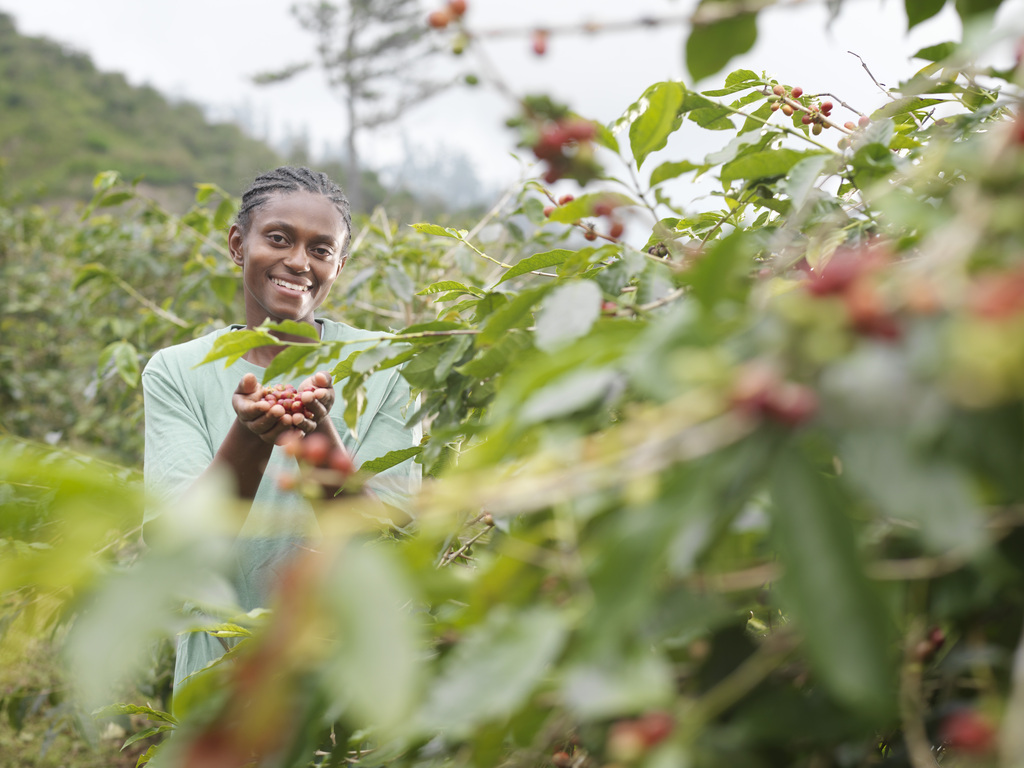
How's about? Have a cup of Yunnan coffee!
It is not difficult to have a cup of Yunnan coffee in ■, because 99% of the domestic coffee comes from Yunnan. On April 10, a series of press conferences on charismatic clouds with Yunnan characteristics held by the Information Office of the Yunnan Provincial Government kicked off. The first one was the appearance of Yunnan Coffee. Coffee has been planted in Yunnan for a hundred years, and it is the first area in mainland China to introduce coffee. 1892
2015-04-20 How a cup Yunnan coffee science and technology a cup of coffee not difficult
The Prospect of Coffee Raw Bean Market
Outside the Wodessa cooperative warehouse on the outskirts of the western Ethiopian city of Kinma, farmers jostled as they watched their world-famous Arabica coffee beans put into sacks marked with a prominent bar code. These barcodes are designed to tell customers around the world where these coffee beans come from. Fekadu Dugassa, manager of the Limu Innarea Coffee Cooperative, explained
2016-06-20 Coffee raw beans market foresight Ethiopia western cities Golden Horse suburbs W
Booming Coffee Industry in Pu'er City
Pu'er City is located between 22 degrees 02 to 24 degrees 50 minutes north latitude and 99 degrees 09 minutes to 102 degrees 19 minutes east longitude. Passing through the Tropic of Cancer, Pu'er City is a plateau climate zone with low latitude and humid monsoon climate in the south subtropics. It is in the same latitude as the world-famous coffee growing area Colombia, which is the golden zone of coffee cultivation.
2014-07-25 Coffee news Pu'er City coffee industry
Ethiopian coffee introduces the best Arabica coffee in the world.
Ethiopia is one of the major producers of Arabica coffee in Africa, producing the best Arabian coffee in the world. It is said that coffee was first discovered by shepherds in Essekafa, and the name of coffee evolved from Kafa, so Essex is still the hometown of coffee. The geographical environment of coffee production and processing is very suitable for coffee growth. Coffee is mainly cultivated.
2015-10-24 Ethiopia coffee introduction production all over the world good rabbi card
Ethiopian Coffee introduction one of the major producers of Arabian coffee in Africa
Ethiopia is one of the major producers of Arabica coffee in Africa, producing the best Arabian coffee in the world. It is said that coffee was first discovered by shepherds in Essekafa, and the name of coffee evolved from Kafa, so Essex is still the hometown of coffee. The geographical environment of coffee production and processing is very suitable for coffee growth. Coffee is mainly cultivated.
2015-01-27 Ethiopia coffee introduction Africa Arabia major producing countries one
The Peak period of Comprehensive Development of Coffee industrialization in China
In 1992, Yunnan Coffee Factory was established. It is a coffee cooperation project of the United Nations Development Programme (UNDP) of the Chinese government. The total assets of the enterprise are 23 million yuan, which belongs to Yunnan Land Reclamation Group. The company moved to Kunming National Economic and technological Development Zone in 2004 and now covers a total area of 15751 square meters and a construction area of 4200 square meters. Main building: workshop 1248 square meters
2015-02-07 China Coffee industrialization Comprehensive Development Peak 1992 Yunnan
The taste of Kenyan coffee is rich and perfect. Introduction to fine coffee beans.
Implement the presidential system. The cabinet is composed of 26 members, including the President, the Vice President, ministers and the Attorney General. The current cabinet was established in June 2013 and is composed of the President, the Vice President, ministers and the Attorney General. The cabinet list is as follows: president Uhuru Kenyatta (Uhuru Kenyatta), Vice President William Luto (William Ruto), Ministry of Interior and Central Government Coordination
2016-08-20 Taste rich beautiful Kenya coffee flavor characteristics boutique coffee beans medium
Introduction to Ethiopian Coffee from the producing area of Fine Coffee
Ethiopia is one of the major producers of Arabica coffee in Africa, producing the best Arabian coffee in the world. It is said that coffee was first discovered by shepherds in Essekafa, and the name of coffee evolved from Kafa, so Essex is still the hometown of coffee. The geographical environment of coffee production and processing is very suitable for coffee growth. Coffee is mainly cultivated.
2015-04-14 Boutique coffee origin Ethiopia introduction
Yunnan small Katim Coffee Bean characteristics, Flavor and taste introduction to the ranking of Coffee producing areas in Yunnan, China
There is a third reason why we have to put in a good word for Nestl é. At that time, leaf rust spread all over the world, and international organizations promoted the cultivation of Katim. To put it beside the point, Colombia is the biggest harvester of the new breed of Katim, and directly put the improved Katim under the national name of Colombia Katim and Katim.
2023-01-01 Tim coffee beans characteristics flavor introduction China Yunnan coffee origin
History of introduction and expansion of Coffee in China in the early stage of Coffee Development (5)
1. From the first peak period of the development of China's coffee industry (1952-1961) to the late 1940s, according to recorded figures, there are 2173.33 hectares of rubber plantations in Hainan Island, with a total of 867600 rubber trees, with an annual output of 199,000 tons of dry rubber, and more than 300,000 coffee plants. the annual output of coffee beans is 1 ton. According to a survey in the early 1950s, there was a large amount of coffee left in Fushan area of Chengmai County, with a total of 70,000.
2015-03-09 China coffee development course early stage introduction expansion
More than half of the coffee shops in China do not make money from coffee.
A few days ago, a "profiteering door" news that the price of Starbucks coffee in the Chinese market is fully higher than that in the United States, causing widespread debate in the society. There are doubts that Starbucks' differential pricing is contrary to the principle of fairness, but there is also a view that calculating only the cost of raw materials while ignoring other operating costs obviously lacks economic common sense, coffee belongs to a non-monopoly industry, and its pricing power should be vested in the market and
2014-08-20 Coffee news coffee shop operation profit
History of introduction and expansion of Coffee in early China (5)
1. From the first peak period of the development of China's coffee industry (1952-1961) to the late 1940s, according to recorded figures, there are 2173.33 hectares of rubber plantations in Hainan Island, with a total of 867600 rubber trees, with an annual output of 199,000 tons of dry rubber, and more than 300,000 coffee plants. the annual output of coffee beans is 1 ton. According to a survey in the early 1950s, there was a large amount of coffee left in Fushan area of Chengmai County, with a total of 70,000.
2015-04-28 Early China coffee introduction expansion
More than half of the coffee shops in China do not make money from coffee.
A few days ago, a piece of news that the price of Starbucks coffee in the Chinese market is fully more expensive than that of the United States, causing widespread debate in the society. There are doubts that Starbucks' differential pricing is contrary to the principle of fairness, but there is also a view that calculating only the cost of raw materials while ignoring other operating costs obviously lacks economic common sense. Coffee belongs to a non-monopoly industry, and its pricing power should be vested in the market and enterprises.
2015-10-28 Domestic more than half coffee shop do not rely on coffee profit